AI Generated Writeups Imported from Chat History
Project / / 2 min read
Matrix and Element communications platform
Deploying and migrating a self-hosted Matrix Synapse and Element communications service.
Overview
I deployed a self-hosted communications platform using Matrix Synapse and Element. The service was initially hosted remotely and later migrated to local infrastructure. The project combined application deployment with DNS, reverse proxying, tunnel access, data migration, and permissions work.
Matrix Synapse provides the homeserver, while Element provides the web client. Keeping those pieces consistent matters because the client, server identity, stored data, and public routing all form one service from a user's perspective.
Deployment
The service runs as part of a Docker-managed application stack. I configured Synapse, the Element web client, administrative access, and the supporting database and network settings needed for normal operation.
The public route is handled through a reverse proxy and Cloudflare Tunnel. This separates application configuration from the edge route: Synapse can be tested locally, the reverse proxy can be checked independently, and the tunnel can be investigated as its own layer.
The deployment work included:
- Setting up Synapse and Element.
- Configuring the Element web client to use the homeserver.
- Managing registration and administration settings.
- Connecting the service to a public domain.
- Routing selected traffic through Nginx Proxy Manager and Cloudflare Tunnel.
- Checking service logs and permissions when the application did not start normally.
Migration
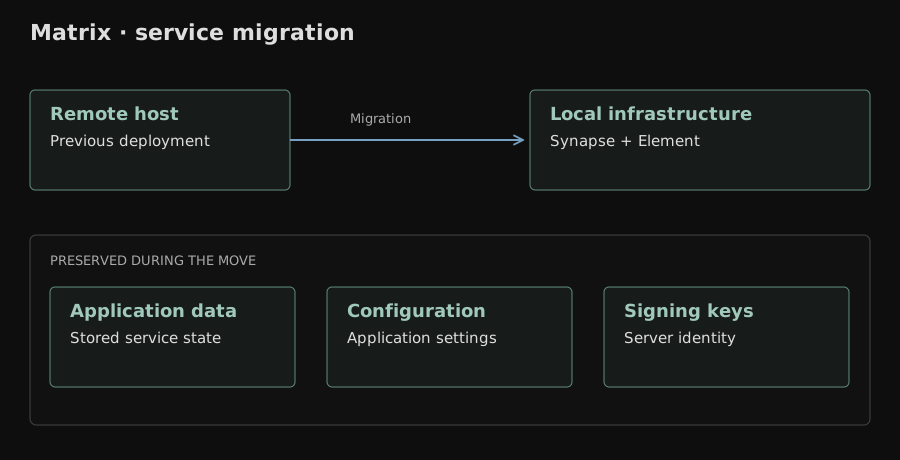
The migration moved the service from a remote host to local infrastructure. The important part was preserving the server's identity and state rather than treating the move as a fresh installation.
The migration process involved transferring application data and configuration, preserving Matrix signing keys, updating the service location, and checking ownership after the files were moved. A deployment can have all of its files present and still fail if the container user cannot read them.
Signing keys deserve particular care. They are part of the identity of a federated Matrix server, so replacing them during a move can create identity and trust problems.
Troubleshooting permissions and routing
Several problems required separating the service into layers:
- Synapse startup and application logs showed whether the process itself could initialize.
- File ownership and mode checks showed whether the container could read its configuration and data.
- Reverse-proxy checks showed whether requests reached the correct internal service.
- DNS and tunnel checks showed whether the public hostname resolved and connected to the intended route.
Temporary permission changes can help confirm a diagnosis, but the final state needs the service's expected owner and least-privilege permissions. The same principle applies to proxy and tunnel rules: a broad route may hide which component is actually responsible for a failure.